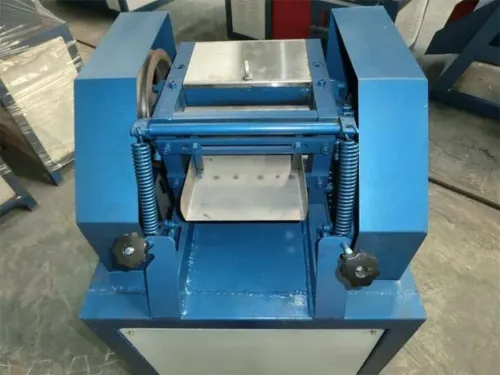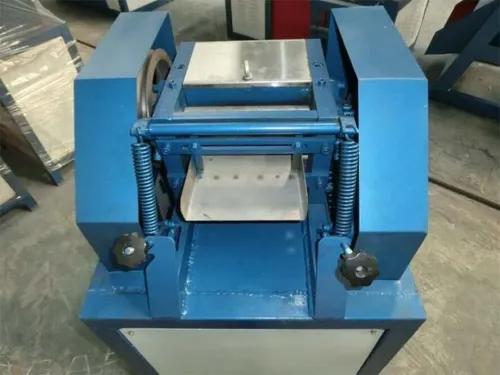

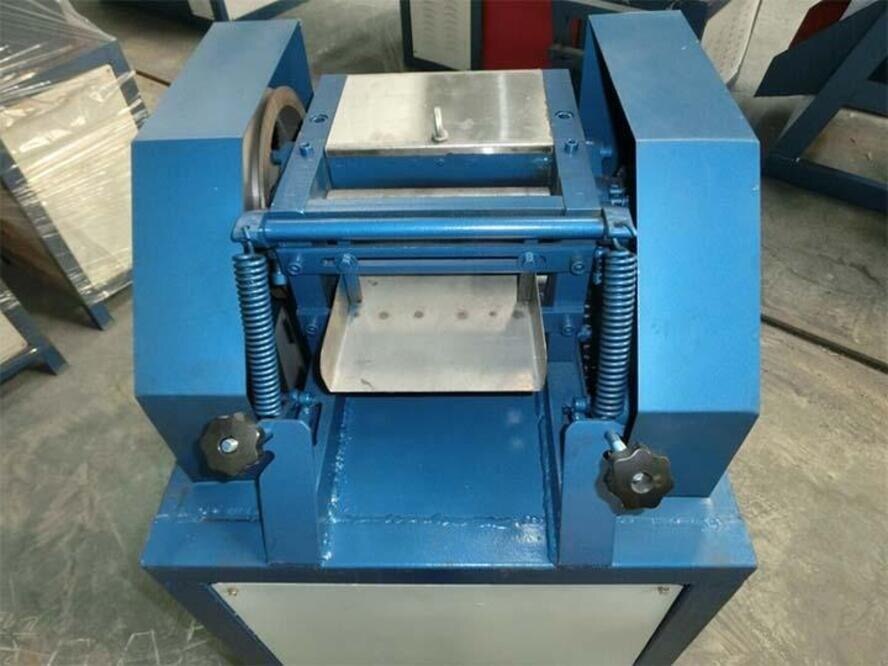
A dana cutter is designed around controlled cutting of a prepared feed, while a PCB board crusher must handle fiberglass laminate, copper, solder, components, dust, and irregular hard inclusions. By the end, you will be able to decide whether a cutter belongs in your e-waste line, specify the right machine, and test its performance without confusing size reduction with metal recovery.
Key takeaways
- Do not feed rigid PCBs into a plastic strand-pelletizing cutter.
- Match cutter design and blade material to board mix and target size.
- Specify feed preparation, dust extraction and guarding before purchase.
- Witness trials for capacity, jams, wear and downstream metal recovery.
Where a dana cutter fits in a PCB recycling line
Do not feed rigid printed circuit boards directly into a plastic Dana cutter. Fibreglass laminate, copper planes, solder joints, connectors, and irregular components create shock loads, blade damage, jams, and dust. A machine designed for molten-plastic strand pelletizing is not automatically a PCB crusher.
A cutter can fit after sorting and depollution when its feed is a defined, compatible stream, such as thermally processed plastic strands rather than rigid board fragments. In that role, it performs controlled cutting or size reduction; it does not separate metals or recover gold.
For p c b board crusher applications, use this process sequence:
- Remove batteries, capacitors, toner cartridges, pressurised parts, and non-PCB items before feeding.
- Use primary crushing to break boards into manageable fragments.
- Apply secondary granulation or classification only when the target liberation size requires it.
- Send the resulting fractions to magnetic, eddy-current, air, density, or sensor-based separation.
The phrase “dana cutters p c b board crusher” should prompt a compatibility check, not a capacity assumption. The cutter’s useful job is feed preparation or controlled liberation ahead of separation. Install an enclosure, interlocked access doors, emergency stops, guarded discharge, and extraction around the cutting stage.
Choose the coarsest output that exposes the target material without creating excessive glass-fibre, resin, and metal dust.
Choose the cutting technology from the board mix and target size
Choose by feed condition and target particle size, not motor rating. For rigid boards with fiberglass laminate, copper, solder and populated components, a Dana cutter is not automatically a PCB crusher. Compare the cutting mechanism, allowable feed, output distribution and dust behaviour against the job you need.
| Option | Best fit | Main trade-off |
|---|---|---|
| Dana cutter | Controlled shear on sorted, prepared feed | Predictable cuts, but hard inclusions can overload knives |
| Knife granulator | Clean, pre-sized boards needing finer uniform granules | Better sizing through a screen, with higher dust and knife wear |
| Hammer mill | Brittle material and aggressive liberation | High impact, noise and dust; fine glass-fibre dust can hinder separation |
| Twin-shaft shredder | Bulky, mixed or irregular e-waste before sizing | Handles difficult feed, but produces less uniform pieces |
| PCB crusher | Purpose-built rigid-board crushing and liberation | Stronger match for boards; verify allowable thickness and component load |
| Component-removal equipment | Depopulation before size reduction | Improves feed safety and recovery, but does not replace crushing |
For Dana cutters for recycling, compare torque, knife geometry, rotor speed and screen area rather than horsepower alone. A slower shear action suits a controlled feed; a hammer mill suits impact-driven liberation, not low-dust operation.
Remove batteries, capacitors, toner cartridges, pressurised parts and non-PCB items before feeding any e waste cutting equipment. Select the coarsest output that releases the intended components; excessive fines carry glass fibre, resin and metal into extraction and separation systems. If boards remain thick, populated or irregular, use component removal or a purpose-built PCB crusher first.
Specify blades, feed preparation, and dust controls before purchase
Do not approve a cutter until the machine, feed, and exposure controls have been specified for the actual PCB mix. A plastic dana cutter is usually unsuitable for direct rigid-board reduction when fiberglass laminate, copper, solder, and hard components create shock loads; confirm whether the feed is sorted board fragments or thermally processed plastic strands.
1. Define the mechanical duty. Give the supplier board dimensions, thickness, component density, target output size, and continuous-duty rate. Request blade material, edge geometry, rotor clearance, torque rating, overload protection, replaceable wear parts, and a stated response to glass-fibre abrasion. A catalogue rate based on uniform plastic does not prove performance on populated boards.
2. Write the feed-preparation procedure. Remove batteries, capacitors, toner cartridges, pressurised parts, loose cables, and non-PCB items before cutting. Reject wet, sealed, or unidentified items. Manual feeding needs a guarded hopper, restricted hand access, and a controlled method for clearing bridges; never rely on an operator reaching into the cutting chamber.
3. Specify containment and extraction as part of the e waste cutting equipment. Require an enclosed feed and discharge, interlocked access doors, emergency stops, sealed transfer points, and local exhaust connected to filtration selected for fine resin, glass-fibre, and metal dust. Prohibit compressed-air cleaning.
4. Set the coarsest size that achieves liberation for the downstream separator. Excessive fines complicate p c b board crusher applications, contaminate product fractions, and increase exposure and combustible-dust controls. Confirm handling and compliant disposal for brominated flame-retardant residues before commissioning.
Use a witnessed trial to verify capacity and operating risk
Reject any capacity claim based on an empty-machine run. For an industrial cutter machine in Bengaluru, use a witnessed acceptance trial with the feed you will actually process.
- Thick multilayer boards
- Populated boards
- Boards containing connectors
- Rejected pieces from normal production
Run that mix continuously, not as a short batch of easy material. Record:
- Tonnes per hour at the planned feed rate
- Percentage passing the target size
- Motor amperage and energy used per tonne
- Dust leakage at the enclosure and discharge
- Noise level at the operator position
- Jam frequency, clearing time, and restart behaviour
- Knife wear, edge damage, and inspection time
Set acceptance limits before the trial. A machine that reaches catalogue throughput with clean plastic can lose capacity under copper, solder, glass-fibre laminate, and irregular component loads. Compare the result with your required downstream screen size, not with the supplier’s nominal figure.
Watch the operator as closely as the machine. Confirm guarded discharge points, interlocked access doors, emergency stops, and extraction remain effective during a jam and after opening the chamber. A cutter that needs hand intervention for frequent blockages carries a larger operating risk than its throughput suggests.
Ask Ashwini Engineering Works for the proposed model’s knife material, service parts list, and continuous-duty rating before comparing dana cutters for recycling with a PCB crusher. Those documents reveal whether the trial machine is designed for this feed or merely adapted to it.
Related products
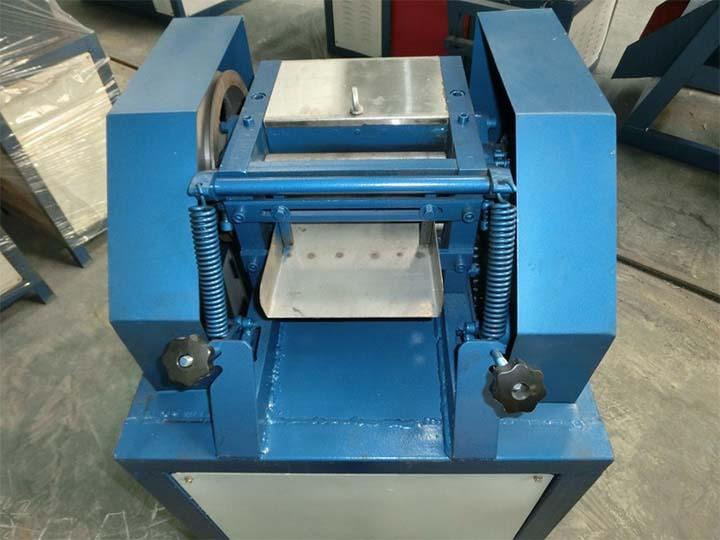 | Plastic Recycling Machinery A Dana Cutter (also called a plastic pellet cutting machine) is a crucial machine used in plastic recycling and extrusion lines to cut molten plastic... View product → |
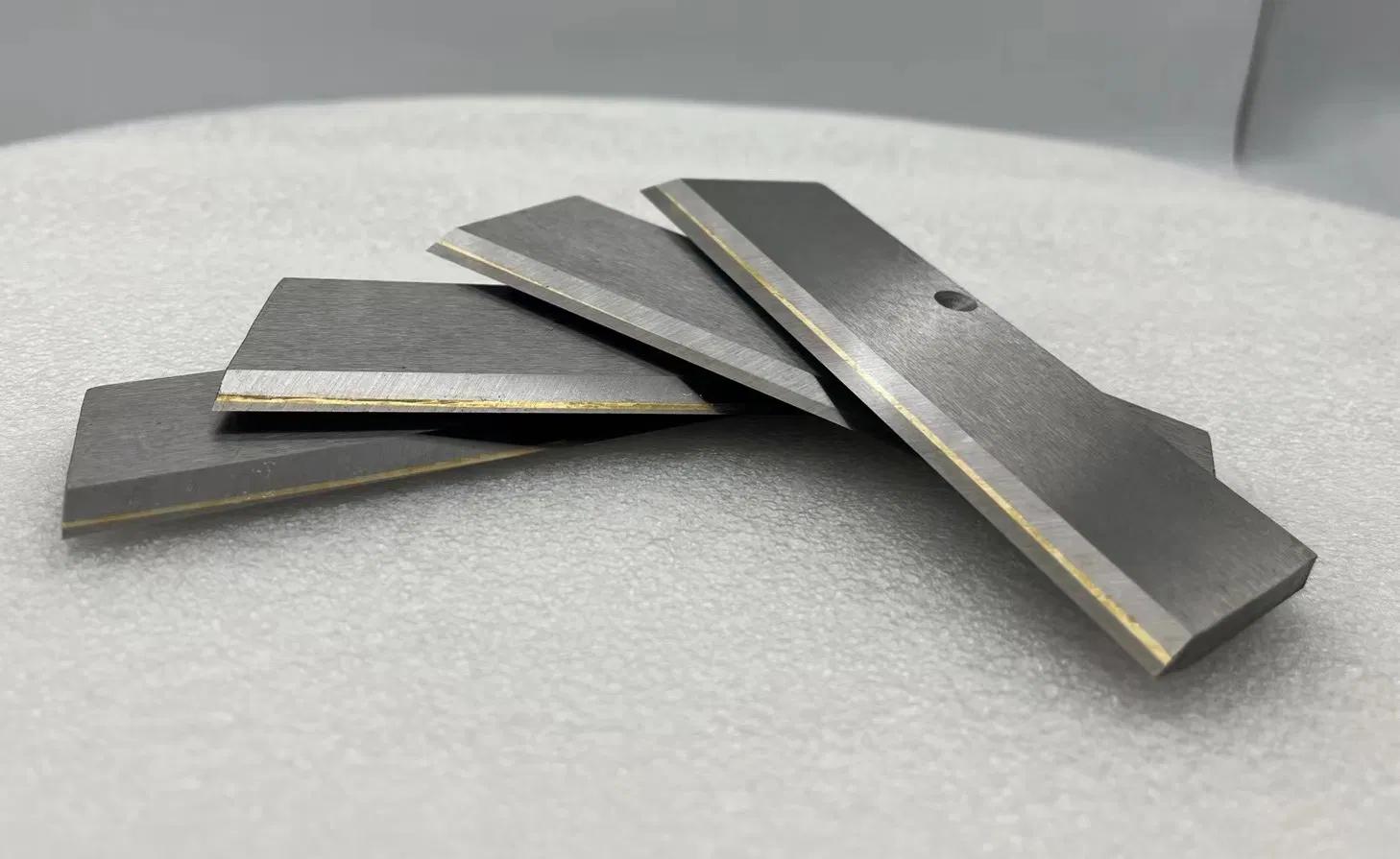 | Plastic Recycling Machinery & High-Speed Steel (HSS) Blades Industrial blades are critical components in machines like grinders, granulators, agglomerators, extruders, and dana... View product → |
Measure the real benefit through maintainability and downstream recovery
Dependable value comes from maintainability and controlled output, not the cutter’s nameplate capacity. For Dana cutters for recycling, verify the specific model’s parts list for replaceable knives, reversible edges where applicable, accessible bearings, and standard motor and gearbox parts.
Obtain written spare-parts lead times before installation; a low-cost knife that takes weeks to arrive can stop the line.
| Ownership feature | Value after installation | Verify before purchase |
|---|---|---|
| Replaceable knives | Faster wear recovery and consistent cutting | Knife grade, fixing method, and stock availability |
| Accessible bearings | Shorter inspection and replacement downtime | Service access without dismantling the enclosure |
| Standard drive parts | Easier motor or gearbox replacement | Manufacturer, model, and local supply route |
| Interlocked enclosure | Safer feeding and fewer retrofit problems | Door switches, emergency stops, and guarded discharge |
For Dana cutters P C B board crusher applications, treat enclosure, extraction, and access controls as core specifications. Retrofitting them after commissioning can disrupt production, especially with manual feeding of irregular boards.
Output determines whether separation improves or becomes harder. The target is the coarsest cut that liberates copper-bearing conductors and components for magnetic, eddy-current, air, density, or sensor-based separation. Excessive fines carry glass fibre, resin, and metal-rich dust into extraction and product fractions, increasing contamination and exposure-control demands.
Remove batteries, capacitors, pressurised parts, toner cartridges, and unrelated waste before cutting. A cutter exposes material; it does not recover gold or produce saleable copper without downstream separation and a measured mass balance.
Frequently asked questions
Where does a Dana cutter fit in a PCB recycling line?
It fits after feed preparation and before screening, separation or downstream size reduction when its design matches the PCB feedstock.
How do you choose cutting technology for PCB boards?
Compare board thickness, fibreglass content, copper loading, attached components and required output size before selecting a cutter.
What should you specify before buying PCB cutting equipment?
Specify blade material, rotor and screen configuration, feed preparation, dust extraction, guarding, access for maintenance and acceptable wear limits.
What should a witnessed PCB cutter trial measure?
Measure throughput, output size, jams, dust release, power draw, blade damage, maintenance time and the recovery performance of downstream separation.