
A plastic lump can mean a soft purge block, a rigid rejected part, a thick sheet, or fused process waste, so the same machine will not suit every feed. By the end, you will be able to match the material to an agglometer, shredder, grinder, granulator, compactor, or direct extrusion line and define a trial that proves whether densification pays for itself.
Key takeaways
- Use an agglometer for prepared film, raffia, sacks, fibre, and thin sheet.
- Pre-cut large plastic lumps before feeding them into the agglomerator.
- Compare a shredder, granulator, or plastic densifier machine against your feedstock.
- Measure bulk density, throughput, power use, and extruder feeding during a purchase trial.
When does a plastic aglometer suit plastic lump processing?
A plastic aglometer for plastic lump processing suits prepared, low-density feed more than large, dense blocks. Loose film, raffia, woven sack, fibre, and thin sheet benefit when higher apparent bulk density will improve conveying or extruder feeding.
Purge blocks, thick sheet, injection-moulding sprues, rejected rigid parts, and fused lumps need closer inspection. If pieces are large, thick, rigid, or cannot enter the feed opening consistently, use a plastic lump shredder, crusher, lump breaker, or heavy-duty granulator first.
Dense rigid lumps may gain too little volume reduction to justify another power and handling stage.
| Equipment | Main action | Best use |
|---|---|---|
| Agglomerator or agglometer | Tearing, rubbing, friction heating, and compacting | Low-density film, fibre, raffia, woven sack, and thin sheet |
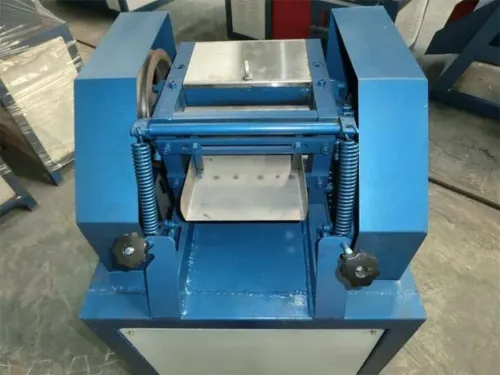
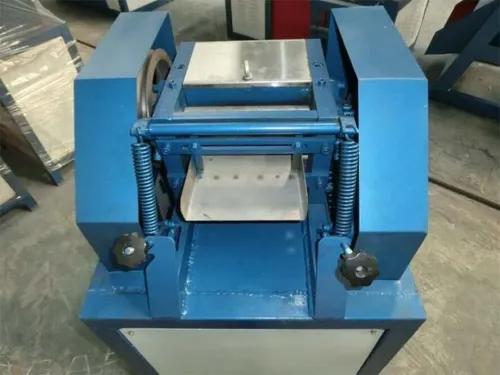
| Shredder or crusher | Cutting and breaking | Large purge blocks, fused lumps, and hard rigid scrap |
| Granulator or grinder | Cutting with screen-controlled sizing | Defined flake size for dosing or extrusion |
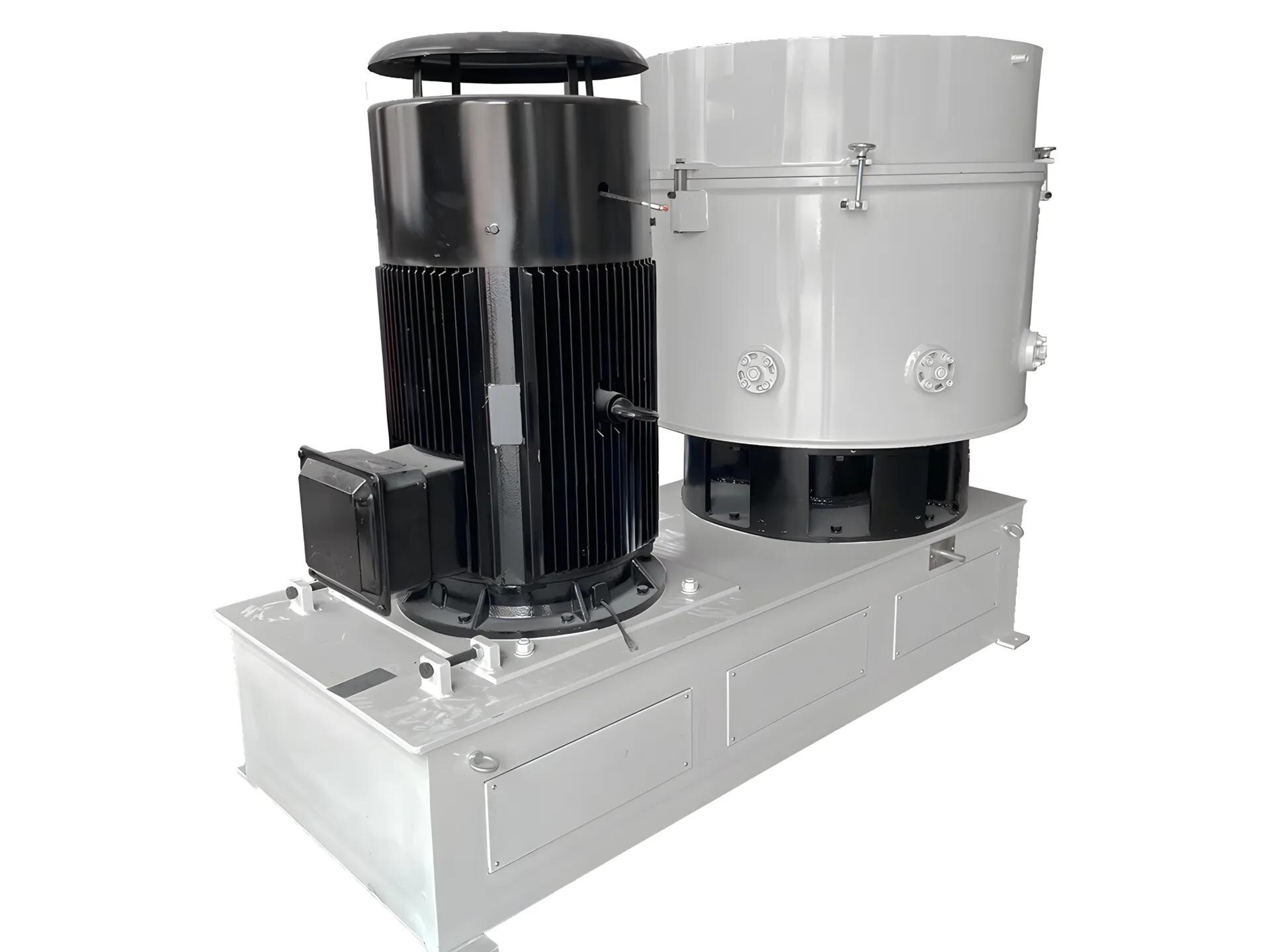
A plastic aglometer machine is primarily a friction-based densifier, not a precision size-reduction machine. Its rotor and knives tear and rub material until surface heat softens the polymer and forms irregular, partially fused agglomerates.
Choose an agglomerator when prepared feed enters steadily and density is the problem. Choose size-reduction equipment when dimensions, wall thickness, or rigidity prevent consistent feeding; a screen-controlled granulator is the better choice when uniform flakes matter.
What happens inside an agglometer, and what material comes out?
The discharge is an irregular, partially fused agglomerate—not a pellet. A rotor and knives tear, rub, and compact the feed; frictional heat softens the polymer surface, allowing pieces to bind into denser clumps.
1. Feed the prepared material into the chamber and set rotor speed against the feed rate. Dull or damaged knives reduce cutting and rubbing, while overfeeding prevents heat transfer and leaves poorly densified output.
2. Control residence time by watching the discharge temperature. Underfeeding concentrates friction on too little material; excessive residence time can overheat the polymer and fuse oversized clumps. The plastic agglometer machine needs a stable balance rather than maximum speed.
3. Inspect the product immediately after discharge. A plastic densifier machine does not produce uniform pellets or screen-controlled flakes; expect varied agglomerate sizes shaped by the feed, knife condition, speed, and temperature.
4. Measure actual before-and-after apparent bulk density using the same sample preparation, container, filling method, and test conditions. ASTM D1895 or ISO 60 provides a defined basis, because density figures change with moisture, particle form, and handling.
Hot output can continue softening and clump in a bag, conveyor, or hopper. Specify forced cooling, an air conveyor, a cooling mixer, or another suitable discharge system, then check the cooled material for bridging and stable flow before judging whether the agglometer delivered useful densification.
How should you prepare plastic lumps before agglomeration?
A plastic lump does not always need pre-shredding, but every piece must enter the chamber consistently. Use this procedure before feeding a plastic agglometer for plastic lump processing:
1. Sort the feed by polymer. Keep PVC, PET, polyamide, heavily filled plastics, and mixed PE/PP/PVC streams separate unless a material-specific trial proves the combination is safe and useful.
2. Remove metal, fasteners, glass, mineral contamination, and dirt. Use inspection and magnetic separation where appropriate. Hard contaminants can chip knives, damage bearings, and cause unplanned stoppages.
3. Check moisture before feeding. Washing and drying remain separate operations: wet material consumes frictional heat through evaporation, creates steam, and makes discharge density and temperature inconsistent. Agglomeration does not dry dirty feed.
4. Reduce pieces that are oversized, rigid, thick, or difficult to feed. A plastic lump shredder, lump breaker, crusher, or granulator should produce a stream that enters continuously. Large pieces can bridge the inlet, stall the rotor, overload the drive, chip knives, damage bearings, and create uneven residence time.
PVC needs material-specific trials, temperature monitoring, ventilation, and the builder’s safety procedure because overheating can release hydrogen chloride. PET, polyamide, and heavily filled plastics also need conservative trials because heat and wear behaviour differ from PE or PP.
Agglomeration does not separate polymers, remove contamination, or restore degraded resin properties. Feed preparation determines whether densification improves handling or merely turns unsuitable material into hot, inconsistent clumps.
Which machine should you choose instead—or before—the agglometer?
Choose the machine by the result you need, not by the word “lump” in the sales description. A plastic lump shredder or heavy-duty crusher suits large purge blocks and hard lumps; a granulator suits a defined particle size controlled by a screen; an agglomerator suits low-density material that needs compaction and easier conveying.
| Option | Required result | Correct choice |
|---|---|---|
| Large purge blocks or hard lumps | Break oversized, rigid feed | Heavy-duty shredder or crusher |
| Screen-controlled flakes | Produce a defined particle size | Granulator |
| Low-density film, fibre, or thin sheet | Compact material and improve conveying | Agglomerator or plastic agglometer machine |
| Densification without friction-based partial fusion | Increase bulk density without softening and fusing surfaces | Compactor or plastic densifier machine |
| Clean, sorted, consistently sized feed | Feed the extruder reliably without another treatment stage | Direct extrusion feed |
A plastic agglometer machine becomes worthwhile when its density gain improves extruder feeding or transport enough to offset power, knife wear, cooling, labour, and extra handling. Dense rigid lumps often fail this test because they gain too little volume reduction.
Ashwini Engineering Works can help assess the upstream cutting stage, conveyors, screening, and downstream feed as one line instead of treating densification as an isolated purchase. Require a material trial before choosing: measure feed consistency, density gain, stoppages, energy use, cooling and actual extruder performance. The recommendation must follow that evidence, not the machine label.
How can a purchase trial prove whether densification pays?
A purchase trial must use your actual plastic lump, including the largest pieces, normal contamination, moisture condition, and polymer mix. A clean sample of easy material can make an unsuitable plastic agglometer for plastic lump processing look profitable.
Record these results during a repeatable run:
- Tonnes per hour and kWh per tonne
- Feed and discharge temperature
- Apparent bulk density before and after processing, using the same procedure under ASTM D1895 or ISO 60
- Unacceptable oversize percentage
- Knife wear, stoppages, and cooling performance
- Reliable feeding into the next machine
Convey and store the output before accepting it. Inspect it afterward for delayed clumping, because hot agglomerates can fuse after discharge and jam the next machine.
Reject the proposal or redesign the line when:
- Metal remains uncontrolled
- PVC or incompatible polymers are mixed
- Wet feed destabilises operation
- Heavily filled material causes rapid knife wear
- Pieces exceed the feed opening or rotor capacity
Compare the measured gain with the full alternative cost:
| Measured outcome | Decision | Cost question |
|---|---|---|
| Clear density gain and stable next-stage feeding | Continue evaluation | Does it exceed pre-shredding, drying, cooling, maintenance, and operator time? |
| Little density gain or unreliable feeding | Reject or redesign | Would a shredder, granulator, or plastic densifier machine solve the problem more cheaply? |
An agglomerator is worth buying only when it fixes a measured low-density feeding or handling problem that simpler size reduction cannot solve.
Frequently asked questions
When does an agglometer suit plastic lump processing?
An agglometer suits prepared, low-density plastic feed such as loose film, raffia, woven sacks, fibre, and thin sheet. Large, dense blocks need size reduction before agglomeration.
What happens inside an agglometer, and what material comes out?
Rotating knives create friction that heats, softens, and compacts plastic. The machine produces hot, irregular densified flakes or granules rather than uniform injection-moulding pellets.
How should you prepare plastic lumps before agglomeration?
Remove metal, stones, and excess moisture, then cut or shred oversized lumps so the feed enters consistently and does not overload the rotor.
Which machine should you choose instead—or before—the agglometer?
Choose a shredder for large tough lumps, a granulator for controlled flake size, and a plastic densifier machine when bulk-density improvement is the primary goal.
How can a purchase trial prove whether densification pays?
Run representative material and record bulk density, throughput, energy use, temperature, downtime, and extruder-feed stability before comparing the operating cost with the benefit.