
The correct choice depends on whether your e-waste needs to be opened and reduced, or separated into controlled size fractions after shredding. By defining the feed, target output, hazards, and downstream separation stages, you can specify the machine that performs the required job instead of buying a screen or blade unit as a complete sorting solution.
Key takeaways
- Use high-speed blades for liberation and size reduction.
- Use vibrating screens after reduction for size classification.
- Match aperture, speed, deck area, and feed rate to your output.
- Specify downstream separation because neither machine identifies mixed e-waste alone.
What job must the machine perform: liberation or size classification?
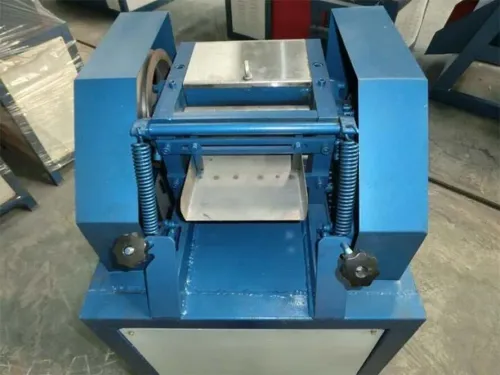
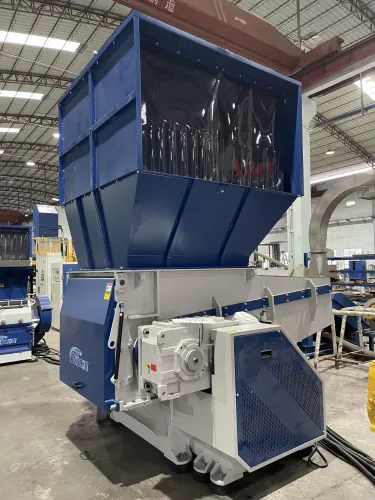
Choose high-speed blades first when the bottleneck is liberation; choose a conventional vibrating screen when the material is already reduced and the bottleneck is size classification. The phrase high speed blades e waste sorting describes size reduction, not material identification.
High-speed blades cut, granulate, and open cables, plastic housings, and mixed assemblies so later equipment can reach separate fractions. They do not identify copper, aluminium, ferrous metal, plastic, or circuit boards, and higher speed does not selectively sort those materials.
| Option | Primary job | Output and limitation |
|---|---|---|
| High-speed blades | Liberation through cutting and granulation | Opened, reduced material; composition remains mixed |
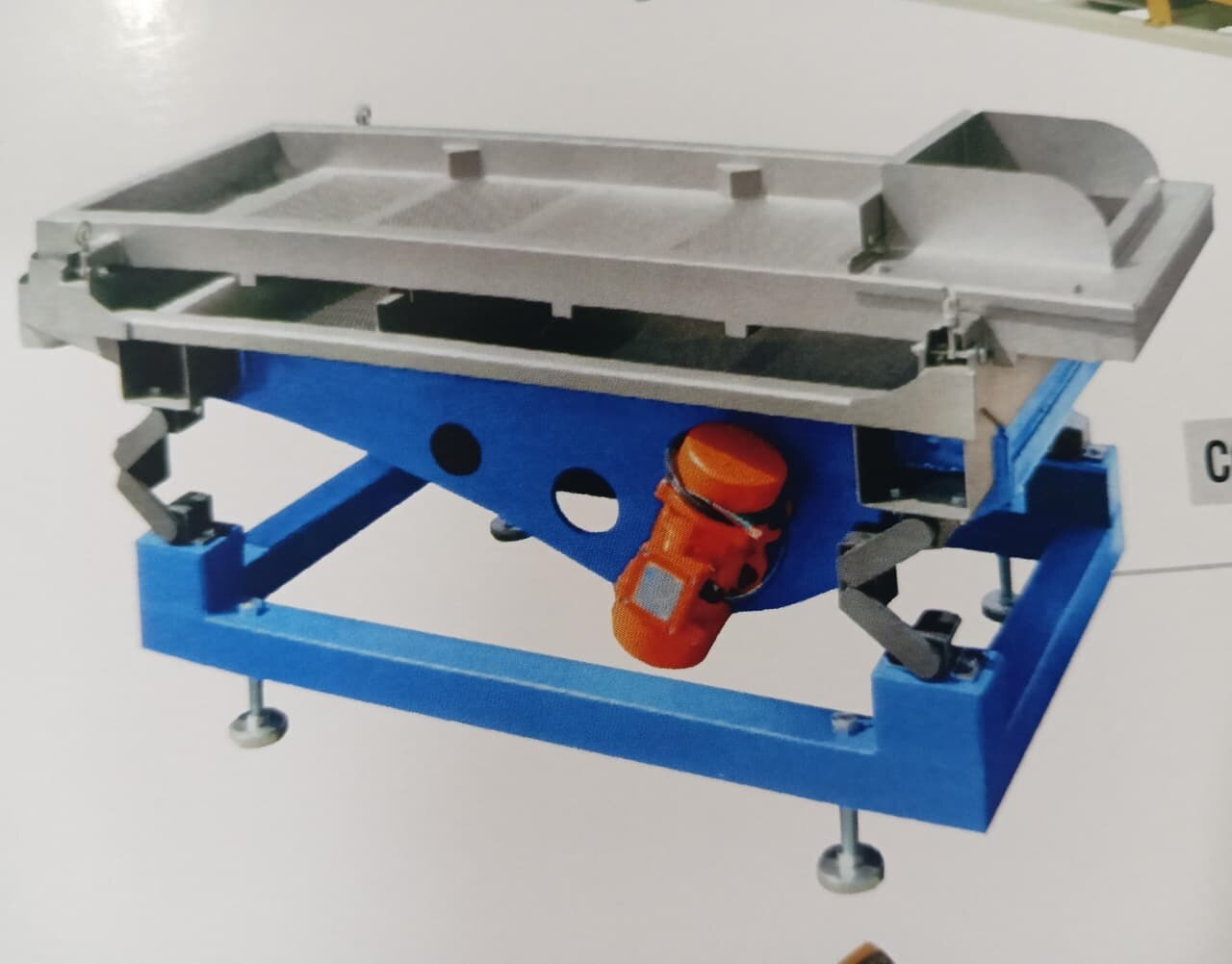
| Conventional vibrating screen | Classification by effective particle size | Material smaller than an aperture passes through; oversize remains on the deck |
A screen classifies an already-reduced feed. Flat or elongated pieces can pass according to their orientation, but the machine still cannot recognise composition or recover non-ferrous metals. Therefore, conventional vibrating screen e waste in bengaluru refers to a sizing stage, not a complete sorting method.
Keep these jobs separate:
- Pre-sorting and depollution remove hazardous items.
- Blades provide liberation.
- Screens create defined size fractions.
- Magnetic systems recover ferrous metal.
- Eddy-current, air, density, or sensor systems perform material-specific separation.
Use blades when later separation cannot access components; use a screen when downstream equipment needs a controlled particle-size range.
Which e-waste feed is suitable for blades and which is suitable for a screen?
Long cables, plastic housings, unbroken appliance pieces, and tangled assemblies belong before blades, not directly on a screen. They can wrap around a screen or bridge its apertures, so a conventional vibrating screen handles neither tangled feed nor unbroken components efficiently.
Whole appliances require pre-sorting and depollution before cutting. Remove or control lithium and other batteries, pressurised parts, lamps, toner cartridges, sealed components, and large metal inserts; otherwise cutting can cause fires, damage, or contamination.
| Feed condition | Better choice | Reason |
|---|---|---|
| Long cables, housings, tangled assemblies | High-speed blades first | Reduces and opens material for later classification |
| Shredded printed circuit boards, reduced hard-drive material, granulated cable | Vibrating screen | Separates an already-reduced feed by size |
| Mixed electronic scrap within a manageable size range | Vibrating screen | Creates controlled size fractions without identifying material chemistry |
A screen can blind or peg when flat plastics, fibrous pieces, long flexible strands, wet material, or sticky dust cover its apertures. Near-size particles and elongated pieces can pass in an orientation-dependent way, making the nominal opening different from the actual particle-size distribution.
Before choosing conventional vibrating screen or high speed blades for e waste sorting, check:
- Particle-size distribution and oversize pieces
- Moisture and sticky dust loading
- Tramp metal and hazardous inclusions
Use blades when reduction is the bottleneck; use a screen when controlled sizing is the bottleneck. Aggressive cutting can create excessive fines, heat, dust, wear, and cross-contamination. A screen preserves size-defined fractions but does not identify copper, aluminium, plastics, or circuit boards.
Which machine parameters determine useful output rather than catalogue capacity?
Catalogue capacity hides the result that pays: saleable recovery, fines and dust percentage, energy per tonne, wear, downtime, and the separation burden left downstream. Higher blade speed can improve liberation, but it also raises heat, dust, fines, and mixed fragments.
Request these test details before comparing machines:
- Vibrating screen: aperture size and shape, number of decks, deck inclination, vibration frequency and amplitude, feed rate, residence time, usable screening area, and tested recovery or partition curves. Vibrating screen applications recycling plants include scalping oversize, removing fines before or after shredding, sizing plastic or metal fractions, and protecting separators from unsuitable feed.
- Blade equipment: rotor configuration, knife count, blade tip speed, acceptable feed size, motor load, torque protection, knife material, adjustment method, and replaceable wear parts.
A nominal mesh opening is not the final particle-size distribution. Flat or elongated e-waste can pass through an aperture on edge, while near-size pieces can report to the wrong fraction; demand test results using your actual feed.
| Option | Useful output | Main failure or cost |
|---|---|---|
| Vibrating screen | Defined size fractions for downstream separation | Blinding, pegging, and misplaced flat material |
| High-speed blades | Liberated, reduced feed from cables, housings, and assemblies | More fines, dust, heat, wear, and cross-contamination |
| Either machine | Proven saleable recovery at an acceptable energy per tonne | Tonnes per hour that increases downstream sorting work |
Compare those outcomes, not tonnes per hour alone.
Why neither machine can complete mixed e-waste sorting alone
Neither machine sorts mixed e-waste into material-specific outputs: blades liberate components, while screens classify by size. A screen cannot distinguish copper from aluminium or separate polymer types; blades cannot selectively identify or recover those materials.
- Manually dismantle and depollute the feed. Remove or control batteries, lamps, toner cartridges, pressurised parts, sealed components, and hazardous inserts before processing.
- Apply controlled size reduction. High-speed blades open cables, housings, and assemblies, but they create a more liberated, often more mixed fine fraction.
- Screen the reduced feed into defined size fractions. A vibrating screen preserves size classes, yet its apertures reveal no chemistry.
- Use magnetic separation to recover ferrous metals.
- Use eddy-current separation for suitable non-ferrous metals, including aluminium-rich fractions.
- Add air classification, density separation, or sensor sorting when the output specification demands cleaner polymer, metal, or board streams.
Neither machine should be selected without dust and fire engineering. Specify enclosed transfer points, extraction and filtration, grounding, housekeeping, battery controls, and spark detection or suppression where justified, alongside a documented fire-response plan.
Tie the line to the E-Waste (Management) Rules, 2022. The recycler must hold registration and maintain required records and reporting through the prescribed regulatory framework, with authorised input and output streams matching the process design. The machine is one stage, not the sorting system.
How to specify e-waste sorting equipment in Bengaluru before placing an order
Do not order e waste sorting equipment in Bengaluru from catalogue tonnes-per-hour figures. Require a representative-feed trial using your actual mix of cables, housings, printed circuit boards, hard-drive material, plastics, metal pieces, moisture, and likely tramp contaminants.
Ask the supplier to record:
- Feed size, throughput, recovery by fraction, fines percentage, dust controls, motor load, energy per tonne, wear rate, maintenance access, and output condition after each stage.
Compare the choice between a conventional vibrating screen or high speed blades for e waste sorting against the tested result:
| Option | Best use | Main risk |
|---|---|---|
| High-speed blades | Liberation and reduction of tangled or oversized feed | Excess fines, dust, heat, wear, and cross-contamination |
| Conventional vibrating screen | Controlled sizing of already-reduced material | Blinding, pegging, or poor separation with wet, fibrous, flat, or near-size feed |
| Both | Reduction followed by classification | Higher integration, guarding, extraction, and maintenance demands |
Confirm authorised input and output streams under your plant’s compliance framework, including registration, records, and reporting required by the E-Waste (Management) Rules, 2022.
Ashwini Engineering Works can be considered alongside other suppliers for a locally supported package of machinery, cutting tools, conveyors, screens, and components; judge service access, spares, integration, and trial data—not the supplier name.
Choose blades when liberation is the bottleneck, a vibrating screen when controlled sizing is the bottleneck, and both when the feed requires reduction before classification.
Related products
 | Plastic Recycling Machinery The Conventional Vibrating Screen from Ashwini Engineering Works is designed for efficient screening, separation, and grading of various industrial... View product → |
 | E-Waste Recycling Machinery The Ferrous Separator Drum Type for E-Waste Recycling from Ashwini Engineering Works is designed for efficient and continuous separation of ferrous... View product → |
Frequently asked questions
Should you choose high-speed blades or a conventional vibrating screen for e-waste?
Choose high-speed blades when the feed needs liberation and size reduction. Choose a conventional vibrating screen when the material is already reduced and needs size classification.
Which e-waste feed suits high-speed blades?
Blades suit bulky, tangled, or bonded e-waste that must be cut or liberated before separation. Remove hazardous items and control metal contamination before feeding.
Which e-waste feed suits a vibrating screen?
A vibrating screen suits pre-shredded, relatively free-flowing material that requires separation by particle size. Select the aperture and deck arrangement for the target fractions.
Can one machine complete mixed e-waste sorting?
No. Blades reduce and liberate material, while screens classify it by size. Mixed e-waste usually also needs magnetic, eddy-current, air, optical, or manual separation.