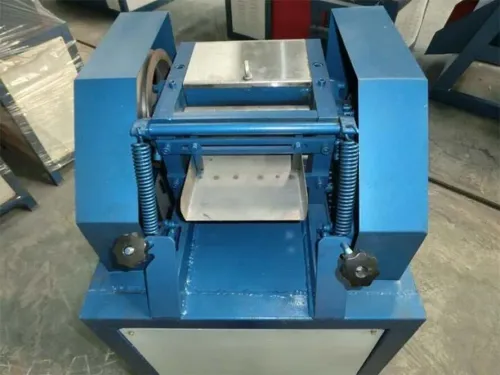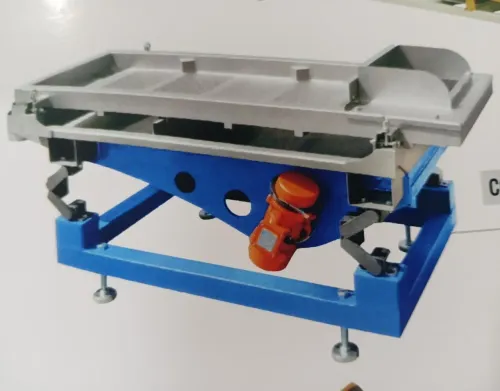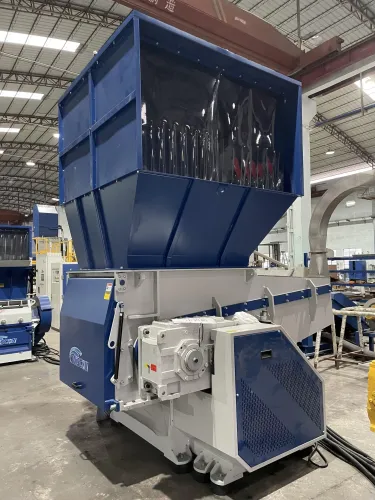

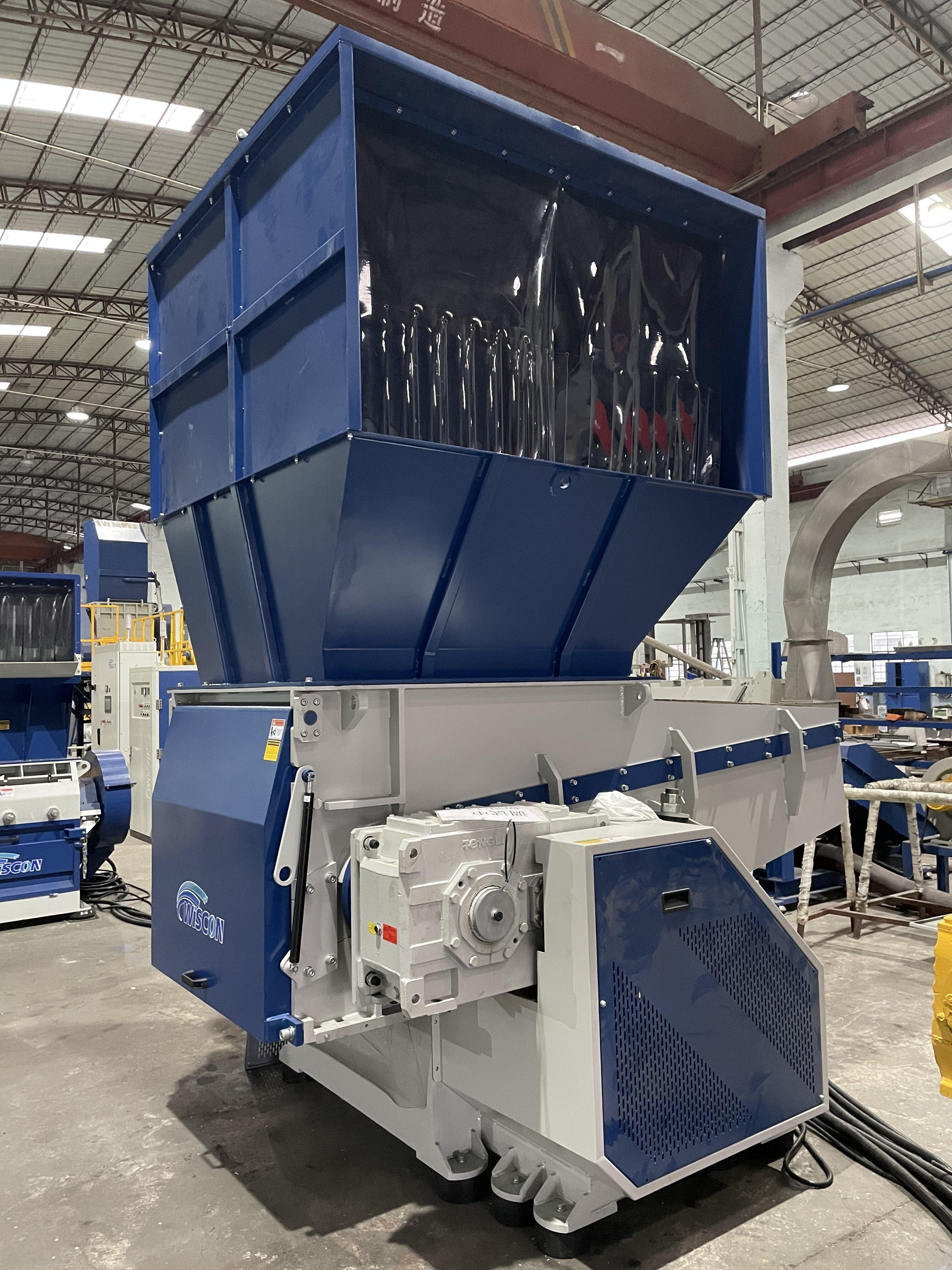
A screen after a shredder does not cut plastic into smaller pieces; it separates pieces that are already small enough from oversized lumps, strips, and folded material. By the end, you will be able to map the screen into a recycling line, choose an aperture and operating specification, and identify when moisture, flexibility, or contamination calls for a different treatment.
Key takeaways
- Use the screen after size reduction to classify, not cut, plastic lumps.
- Choose aperture size from the material’s smallest passable cross-section.
- Specify deck area, vibration, slope, and feed rate together.
- Clean wet or stringy plastic before it blinds the screen.
Where the vibrating screen fits after size reduction
A plastic lump vibrating screen classifies material after a shredder or grinder; it does not reduce particle size. The shredder cuts, while the vibrating screen passes flakes through an opening according to size: a piece passes only when its relevant cross-section can enter the aperture, regardless of its mass or apparent volume.
A practical plastic cutting recycling plastic machinery layout is:
- Feed hopper sends bulky plastic to the shredder.
- The discharge conveyor carries cut material to the vibrating screen.
- The screen sends correctly sized flakes to fines collection, washing or drying, and then extrusion.
- Oversize travels through a defined return conveyor for another cutting pass.
The screen does not identify polymers, separate by density, or remove metal, glass, stones, or hazardous e-waste. Use magnetic, eddy-current, air, optical, or manual-cleaning equipment for those tasks.
Install the screen before size reduction when you need scalping: it can remove already-small material or reject an unusual large item before a granulator. After a shredder, it forms a closed loop and can reduce the load on downstream cutting equipment.
Fit interlocks so feeding stops when the screen or discharge conveyor is blocked; otherwise oversize recirculation can overload the cutter, conveyor, or screen. Provide access for clearing and guarding around drives, shafts, and pinch points.
How to choose the aperture for real plastic lumps
Choose the aperture from the next machine’s requirement, not from the shredder rotor diameter. Ask the granulator, washer, dryer, or extruder what flake or conveying size it can accept, then set the vibrating screen to protect that limit.
A nominal aperture is not a guaranteed plastic-particle limit. A flexible plastic lump can flatten, bridge, rebound, fold, or wrap around wire instead of passing straight through. A thick rigid piece can remain oversize despite having low mass. The screen classifies by the cross-section that reaches the opening, not by weight or apparent volume.
Aperture choice creates this trade-off:
| Aperture | Throughput and separation effect | Main consequence |
|---|---|---|
| Small | Restricts large pieces and produces a finer cut | More oversize recirculation, higher cutting load, and greater blockage risk |
| Target | Matches the downstream feed requirement | Balances accepted flake size against return load |
| Large | Allows higher throughput and easier passage | Sends coarser, irregular material forward and can overload later equipment |
Near-size particles determine the real cut. A piece close to the opening may pass only after tumbling, while long strips can pass end-first or remain across the deck. Folded film behaves like a thicker lump until it unfolds; fines can lodge in openings, reduce open area, and push acceptable flakes into the oversize stream.
Test the actual material before fixing the aperture. Include the longest strips, folded film, flexible lumps, rigid pieces, fines, and intended feed rate, because a setting that works for clean rigid flakes can fail on mixed shredder discharge.
Which screen specifications control capacity and separation
Capacity and separation depend on the complete operating specification, not the aperture alone. In plastic cutting recycling plastic machinery, compare these figures:
- Deck area, open area, feed rate, inclination angle, motor power, vibration amplitude, and frequency.
- Media type: replaceable perforated plate, slotted panel, woven wire, or anti-blinding media.
- Maximum feed-bed depth and the percentage of near-size particles in the plastic stream.
A deep bed or excessive feed rate buries undersize flakes before they contact the apertures, producing a coarser, less consistent cut. Amplitude and frequency must balance conveying with stratification: enough movement spreads material and exposes undersize particles, while excessive movement can carry particles across the deck before they pass.
| Media or arrangement | Main advantage | Check before selection |
|---|---|---|
| Replaceable perforated plate | Wear resistance and quick panel replacement | Plate open area, hole shape, and lump impact |
| Slotted panel | Passes elongated flakes in one orientation | Risk of strips bridging or folding across slots |
| Woven wire | High open area for fine classification | Wire wear, wrapping, and tension |
| Anti-blinding media | Reduces plugging from fines or flexible pieces | Whether it preserves the required cut size |
| Single deck | One classification cut | Use when one oversize/undersize split is required |
| Multi-deck | Several cuts in one vibrating screen | Use when two or more size fractions are required |
Isolate the vibrating body from its support frame on springs or elastomer mounts. Use flexible feed and discharge connections; rigid chutes transfer damaging forces. Stop oscillation reaching cutters, conveyors, guarding, or building steelwork, or the plastic lump vibrating screen will create failures beyond its own frame.
Why dry flakes screen differently from wet or stringy plastic
Dry, rigid flakes are the easiest feed for a vibrating screen, but fines and dust can still fill apertures and blind the deck. A plastic lump may flatten, rebound, or bridge an opening, so its nominal size does not guarantee passage.
- Dry flakes: open apertures give the intended cut until dust packs into them.
- Wet washed plastic: moisture makes fines agglomerate and adhere to the deck, reducing effective open area without changing particle dimensions.
- Film, labels, fibres, and stringy pieces: these bridge openings, wrap around wire, and carry correctly sized flakes into the oversize stream.
- Warm or tacky polymers: they smear across perforated plates, slotted panels, or woven wire and block passage.
Wet or stringy feed can blind the deck and may require a different separation arrangement, such as anti-blinding media, dewatering, air separation, or a later dry screening stage. In plastic cutting recycling plastic machinery, check feed condition rather than copying a screen specification made for dry flakes.
Mixed-polymer feed also changes shape, flexibility, and flow, but the screen cannot identify polymer type. It classifies by opening size only.
A vibrating screen will not remove metal, glass, stones, or hazardous constituents. Add the appropriate stage:
- Magnets for ferrous metal
- Eddy-current separators for non-ferrous metal
- Air classifiers for density and aerodynamic differences
- Optical sorters for identifiable materials or colours
- Manual inspection for irregular or hazardous items
How to validate, maintain, and specify the screen
Validate the screen on the feed you will actually run, not on a dry laboratory sample. Use production plastic lumps at the intended moisture and temperature, including the normal proportion of near-size pieces.
1. Run a measured trial and record throughput, undersize yield, oversize recirculation, contamination carryover, power draw or vibration behaviour, and manual-cleaning frequency. Repeat the test with wet or warm feed if that is part of the process; moisture can agglomerate fines and reduce open area.
2. Ask the supplier to state the accepted feed range, aperture tolerance, open area, maximum lump dimensions, rated feed rate, and the exact response to a blocked discharge. Confirm whether the oversize-return interlock stops the shredder and conveyor, rather than allowing material to pack beneath the deck.
3. Inspect panel tension or fastening, cracked welds, exciter bearings, springs or elastomer mounts, feed-distribution components, and build-up beneath the deck. A loose panel can alter the opening or release metal fragments into recycled plastic. Log these checks at a defined interval and after abnormal vibration.
4. Guard drives, shafts, belts, exciters, and every accessible pinch point. Before clearing a blockage, isolate electrical and stored energy and verify zero movement; use ISO 12100 for the risk assessment and ISO 14120 for guard design.
When comparing a complete plastic cutting recycling plastic machinery package, ask Ashwini Engineering Works to match the screen to the cutter, conveyor, and oversize-return loop. A screen that works beside a shredder but overloads the return path is not a successful specification.
Frequently asked questions
Where does a vibrating screen fit in plastic recycling machinery?
It sits after a shredder or grinder and classifies the output by size; it does not perform the cutting.
How do you choose an aperture for plastic lumps?
Base the aperture on the relevant cross-section of the plastic piece, not its weight or apparent volume.
Which specifications control vibrating screen capacity and separation?
Deck area, aperture size, vibration settings, screen slope, feed rate, and material characteristics all affect performance.
Why do wet or stringy plastics screen differently from dry flakes?
Moisture promotes adhesion and stringy pieces can bridge openings, causing screen blinding and less consistent separation.