
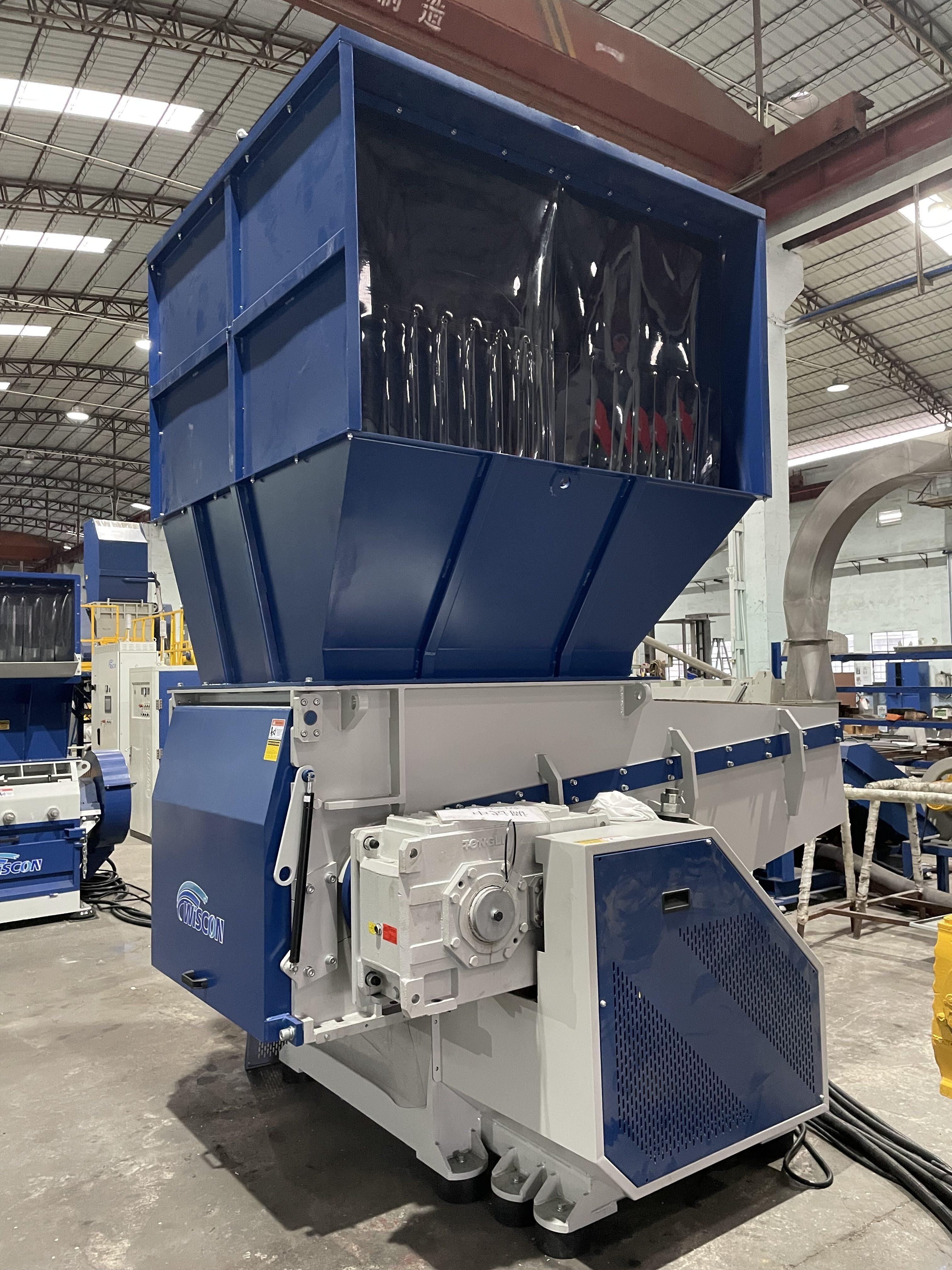
Irregular plastic lumps do not behave like uniform regrind: they can bridge at the inlet, wrap around a shaft, overload a drive, or flood the next machine. By the end, you will be able to decide whether a screw is suitable, prepare the material correctly, specify the feeder, and compare it with belts, vibratory feeders, pneumatic systems, and metering hoppers.
Key takeaways
- Inspect lump size, moisture, contamination, and bridging risk before choosing a feeder.
- Specify throughput in kilograms per hour, not only motor power.
- Request drive protection, inspection covers, and clean-out access.
- Include floor layout, discharge height, power supply, and material samples in your quotation.
How a screw conveyor moves plastic lumps
A screw conveyor moves plastic lumps by rotating a helical flight inside a trough or enclosed tube. Each flight section pushes material toward the discharge, so a plastic lump conveyor acts as a compact, controlled feeder rather than merely a transport device.
Design it around the largest lump, not the average piece: an interlocking pair or bulky runner can bridge an inlet even when most pieces are small.
| Route | Suitable feed | Main risk |
|---|---|---|
| Direct feed | Loose, consistently sized lumps with open flow | Oversized parts can bridge, jam, or form a rotating mass |
| Upstream shredding or grinding | Interlocking injection-moulding pieces, runners, and large parts | Poor size reduction still causes surging and overload |
| Screening or metering | Mixed sizes requiring controlled, uniform loading | A fixed-speed screw can flood or starve the receiving machine |
Feed rate depends on screw diameter, pitch, rotational speed, loading percentage, bulk density, and incline. A larger diameter or faster speed increases capacity, while greater incline reduces it as material slips backward; recalculate torque when changing any setting.
Oversized pieces can surge, overload the motor, bend the shaft, damage flights, and load a shredder or granulator unevenly.
Films, straps, cable ties, and long plastic strings can wrap around a centre shaft or hanger bearings. Start with a cutter, bale breaker, ram feeder, belt feeder, or shaftless screw instead of a conventional screw when stringy material dominates.
Check the plastic before choosing the feeder
Suitability starts with the feed, not the motor. Record:
- Maximum lump dimensions and shape
- Bulk density in kg/m³
- Moisture level and temperature
- Surface tack or softness
- Glass, sand, aluminium, and steel contamination
- Proportion of films, straps, cable ties, or other string-like items
Wet, warm, tacky plastic can smear onto the flight and casing, compact into a plug, soften, or build up when friction, residence time, screw speed, or filled length is excessive. A trial should measure temperature rise and inspect buildup after sustained running.
Abrasive contaminants turn flight edges and casing surfaces into wear items. State the liner or flight material, contaminant level, replacement method, and inspection interval; ordinary carbon steel is not automatically adequate for e-waste fines.
Do not feed mixed e-waste directly into a plastic feeder. Remove batteries, sealed or gas-containing parts, and large ferrous pieces during inspection and segregation, then consider magnetic separation before feeding or size reduction.
Bridging requires a material-handling response, not simply a larger motor.
| Condition | Failure risk | Practical response |
|---|---|---|
| Narrow inlet or interlocking lumps | Bridge or rotating mass | Wider inlet, agitator or live-bottom, matched screw geometry |
| Sticky or warm feed | Smearing and compaction | Slower start, variable-speed control, shorter filled length |
| Films and strings | Wrapping around the shaft | Remove upstream or use equipment designed for stringy feed |
| Glass, sand, metal | Flight and casing wear | Specified wear liner, replaceable flights, scheduled inspection |
Specify capacity, drive, controls, and clean-out access
Specify the feeder as a complete operating system, not as a generic screw. Give the supplier the material rate and geometry needed to calculate capacity, torque, loading, and maintenance access.
1. State throughput in kg/h at the actual incline, conveyor length, horizontal or inclined angle, inlet height, discharge height, screw diameter, pitch, target screw speed, bulk density in kg/m³, maximum lump size, and required loading percentage. A horizontal capacity figure is insufficient because material slips backward through flight clearances as the angle rises.
2. Describe the inlet flow: a steady metered stream or intermittent hopper discharge. Give the receiving shredder, granulator, extruder, or screen’s minimum and maximum feed limits. A buffer hopper with level sensing and variable-speed control can stop flooding and starvation in plastic waste feeding equipment.
3. Request motor power together with overload relays, a torque limiter or shear protection, reverse-jog logic, and a written isolation procedure for clearing blockages. Nominal throughput does not protect a drive from the transient torque created when compacted plastic jams the screw.
4. Require guarding at the inlet, discharge, shaft, couplings, and every accessible nip or entanglement point. Include emergency stopping and controls that prevent unexpected restart after a trip or power return.
Specify clean-out doors, drainage, removable covers, and direct access to flights, liners, bearings, and casing. The quotation should also state how operators isolate, open, inspect, and remove trapped material without reaching into a live conveyor.
Screw conveyor comparison for recycling applications
Tonnes per hour does not decide the feeder. A practical screw conveyor comparison for recycling must test the waste stream, route, contamination, clean-out time, blockage recovery, wear-part replacement, and metering accuracy.
| Option | Waste-stream fit | Route and metering | Main drawbacks |
|---|---|---|---|
| Screw conveyor | Compact, enclosed handling for consistent plastic lumps; poor with films, straps, sticky waste, or severe contamination | Accurate controlled dosing over short routes | Higher contact, torque, wrapping, and blockage risk; inspect flights and liners |
| Belt conveyor | Bulky, irregular, sharp, lightweight, or fragile pieces with less entanglement | Long horizontal runs; add a controlled discharge for positive metering | More floor space; carryback and belt clean-out add labour |
| Vibratory feeder | Free-flowing, size-consistent pieces needing regulated dosing | Precise short-feed dosing | Poor fit for stringy, sticky, or easily damaged plastics; vibration can degrade fragile pieces |
| Pneumatic conveying | Compatible, size-controlled plastic pieces needing enclosed transfer | Selected routes with no floor conveyor | Requires air, filtration, energy, separation, and recovery equipment |
| Live-bottom hopper or agitator | Highly variable feed that bridges or rat-holes | Stabilises discharge before a downstream machine | More moving parts, power, and cleaning access |
Choose a screw when space is tight, containment matters, and the receiving shredder or granulator needs steady feed. Choose another system for long horizontal distances, steep inclines, fragile material, severe variation, or plastic that wraps around flighting.
A larger motor does not cure bridging; use a wider inlet, agitator, slower start, variable speed, or matched screw geometry.
What to include in a Bengaluru quotation and site check
Treat Bengaluru as a site condition, not a specification. For a screw conveyor in Bengaluru, record headroom, conveying length, discharge height, electrical supply, ambient exposure, drainage, wash-down practice, enclosure needs, and clearance to remove the screw for maintenance. A low roof or fixed wall can make a suitable machine impossible to service.
Request a trial with the actual plastic lump or mixed waste, including the largest pieces and normal contamination. Record:
- kg/h at the stated angle
- motor current at startup and steady running
- torque-trip behaviour and temperature rise
- bridging and carryback
- flight and casing condition after sustained operation
The quotation must name screw diameter, pitch, flight thickness, liner or wear material, access doors, guards, controls, sensors, overload protection, and replacement parts. State isolation and anti-restart arrangements for blockage clearing.
| Check | Why it matters | Failure if ignored |
|---|---|---|
| Screw | Compact, enclosed, controlled feed | Bridging, torque trips |
| Belt | Bulky or irregular pieces | More floor space |
| Live-bottom or agitator | Variable, bridge-prone feed | Higher mechanical complexity |
Ashwini Engineering Works is worth comparing only if its proposal answers these measurements and matches the receiving shredder, granulator, extruder, or screening line. For a screw conveyor for plastic lump in Bengaluru, choose the design that matches the waste and site—not the largest motor or catalogue capacity.
Related products
 | Plastic Recycling Machinery The Screw Conveyor from Ashwini Engineering Works is a reliable and efficient material handling solution designed for smooth transportation of bulk... View product → |
 | Plastic Recycling Machinery The Belt Conveyor from Ashwini Engineering Works is designed for smooth, efficient, and continuous material handling across various industrial... View product → |
Frequently asked questions
How does a screw conveyor move plastic lumps?
A rotating helical flight pushes plastic lumps through a trough or enclosed tube toward the discharge, providing controlled feeding as well as transport.
What should you check before choosing plastic lump feeding equipment?
Check lump dimensions, bulk density, moisture, contamination, flexibility, bridging tendency, and the required feed rate.
What specifications belong in a screw conveyor quotation?
State capacity in kilograms per hour, conveyor length, incline, screw diameter and pitch, drive rating, controls, discharge height, materials of construction, and clean-out access.
When is a screw conveyor the wrong choice for plastic recycling?
Choose another feeder when material bridges easily, contains long flexible films that wrap around the flight, needs gentle handling, or requires highly precise loss-in-weight dosing.